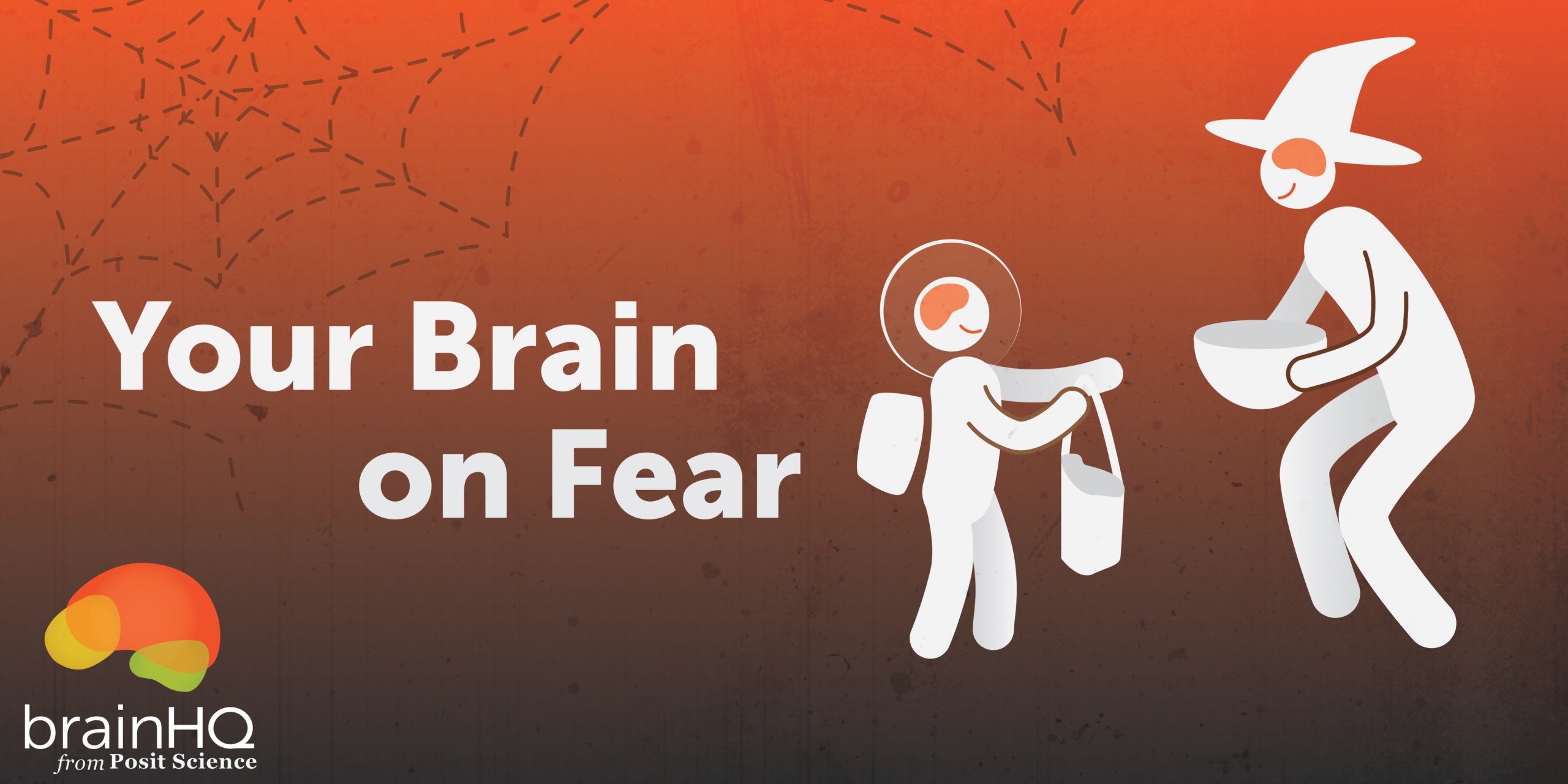
Everywhere I look, I see signs that Halloween is fast approaching. What was once a holiday primarily for children is now a celebration targeting all of us. As a neuroscientist, I get asked what the heck is going on in our brains that we so enjoy a holiday whose hallmark is scary stuff?
The simple answer is: Scary stuff is stimulating.
When you encounter scary stuff, the brain kicks in — with vigor — to figure out survival.
How the Brain Reacts
The brain controls the body and raises the heart rate to pump blood at a higher pressure out to the muscles (and less to areas that in that moment matter less, such as your kidneys), in order to make you ready to fight or flee.
Fear amplifies your alertness, while turning down the thinking brain, because you’re going to be reactive. The amygdala — that almond-shaped part of the brain that processes emotions — goes into high gear, recognizing survival may be at stake.
Overall, scary stuff makes for a stimulating experience.
Context Matters
Of course, in all of this, context matters. As long as the snake is far enough away, it’s stimulating — it’s when the snake is a little closer that things can go off the rails.
That’s why we enjoy visiting a haunted house for Halloween. Things there are inherently scary, and I should be frightened by them… if they were real. But overriding that is my thinking brain, recognizing the context of the situation and controlling how I react — which is just enough, so I get the thrill of the fear without running out of the haunted house to save my life.
By the way, that’s also why people like horror movies, but seldom run out of the theater in the middle of the film.
Strong Scary Memories
Real life scary events often produce some of life’s strongest memories.
You see something that’s threatening to you, and it’s really important that the brain records it. Because it’s all about survival.
The brain is very good at recording things that are threatening to you. The brain turns on the chemicals in the brain that modulate changes in the brain to ensure that you record it deeply, so you will never forget it.
Basically, you are building a library of things that you should be responding to fearfully. So, you can grow your fears to things that really are appropriate to fear.
Blocked Scary Memories
However, some scary moments are so traumatic that we block memories of them.
People commonly suppress things that are so persistently fearful that they just can’t escape. They do that because they pay a heavy price when these memories rise up in the mind and are recalled.
That blocking of difficult memories is what typically happens in post-traumatic stress, where you are doing everything possible to block that memory from your present mind, because of the hurtful consequences.
Our brains have powerful mechanisms to make life livable, even though there might be terrible traumatic things that occurred in your life.
Whether engraving deep memories or blocking them, your brain is focused on the consequences that aid your life and survival.
Halloween Dilemma
One of the nice things about Halloween is that the so-called “Halloween Dilemma” — trick or treat? — has only wonderful consequences.
Either you get a treat to add to your bag, or, once in a great while, you get to contemplate, and perhaps enact, some little “sparky thing” in revenge.
It’s a really great concept.
Planning a Great Halloween
In recent years, I’ve learned how to always have a great Halloween.
First you have children, then you convince them to have children, and then, like me, you get to follow your grandchildren around as they trick or treat and get all gooey with cute — not scary — new memories.
Of course, if you feel obligated to be filled with fear — in order to truly celebrate the holiday — you can always worry about the zombie apocalypse.
Be very frightened.