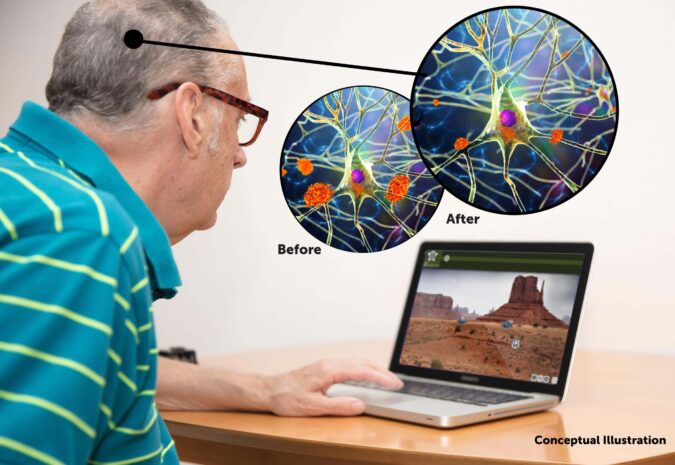

New study: Brain training lowers levels of a hallmark of Alzheimer’s
Over the past year, there has been a groundswell of evidence on the benefits of brain training for dementia—and study results revealed today add yet another surge.
With thousands of health apps flooding the market, finding genuinely useful tools can be overwhelming. The digital mental health marketplace is crowded and largely unregulated. This makes it difficult for healthcare providers to know which products they can safely recommend, and for everyday users to know which ones they can trust.
Recently, it was announced that Dr. Michael Merzenich is a recipient of the Merkin Prize, awarded to innovators of breakthroughs that have demonstrably improved human health.
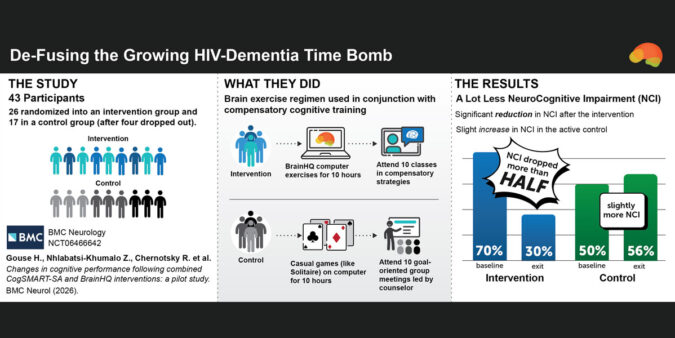
45 years ago, the first cases of AIDS were identified in the US. In the early years, an AIDS diagnosis was almost always a devastating death sentence. But thanks to tremendous work by the global scientific community, treatments for the physical effects of HIV infection have come light years since then. Now, many people are able to live life to the fullest despite an HIV infection.
Here is a sampling of the INHANCE Study News from around the globe.
News coverage for the ACTIVE Study results in publications, websites, and stations.
Can brain training “rewire” the brain to prevent dementia? What about repair the brain following an injury? Or turn back the clock on brain aging?
A 20-year study published in February of 2026 has shown that one specific type of cognitive training can significantly reduce Alzheimer’s disease and related dementia diagnoses years later.
The recent INHANCE neuroimaging study made headlines around the globe when it showed brain exercises in BrainHQ increased the production of acetylcholine (the “pay attention” chemical) — known to decrease with aging, and to plummet in dementia.
Brain training reached a turning point in 2025, after years of growing evidence snowballed into an avalanche of scientific proof. A surge of new research about BrainHQ helped erode long-standing skepticism, with a record-breaking 70 peer-reviewed publications in science and medical journals in 2025.
Sign-up for a monthly electronic newsletter that provides information about brain fitness and cognitive issues.