
Some 45 years ago, the first cases of AIDS were identified in the US. A few years later, the Human Immunodeficiency Virus (HIV) was found to be the cause, and that was followed by four decades of ever-improving treatments for HIV and its prevention. Now, many people are able to live life to the fullest and manage their HIV infection.
However, managing HIV for many years can come with a cognitive cost. People who have lived with HIV for a long time—many of whom are now entering older adulthood—can experience brain health issues like cognitive slowing and memory issues, and over time, according to the Kaiser Permanente, have nearly double the risk of their uninfected peers for developing dementia.
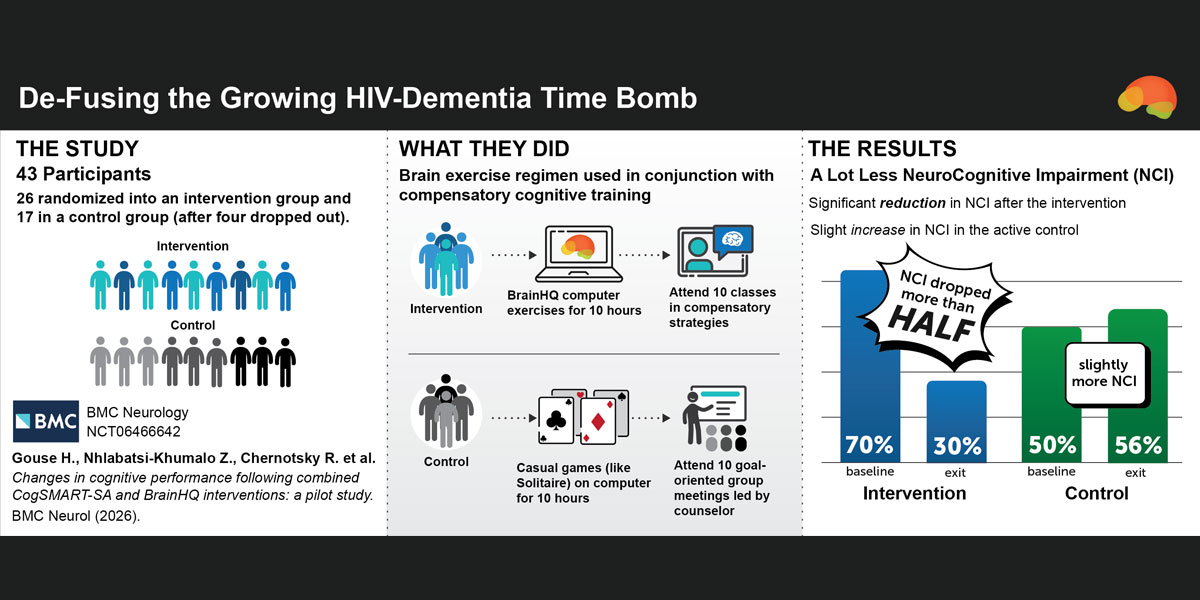
Here’s some good news: A new study conducted by researchers from the University of Cape Town in South Africa has found that using a set of BrainHQ exercises in conjunction with compensatory cognitive training can improve the cognitive status of people with HIV who face that risk. At the beginning of the study, 70% of the study participants in the intervention group (those who used BrainHQ plus compensatory cognitive training) were cognitively impaired. That dropped to 30% after the training. In the control group (who spent time on casual computer games and met in goal-oriented group meetings), the percent of impaired individuals actually increased from 50% to 56%.
You can learn more about recent BrainHQ results in rejuvenating the brain by about a decade and about lowering dementia risk over a 20-year period here and here.
That’s an amazing result: to show for the first time that cognitive impairment is reversible in patients with chronic HIV infection is a breakthrough result, both for the basic science of brain health and for the people and their friends and loved ones affected by this disease. At Posit Science, we’re honored to be a part of this important result–and excited to see a path forward to help people living with HIV live a full, brain-healthy life.