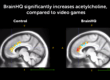

Surprisingly, a recent NIH-funded study on changes to the brains of older adults is getting a lot of buzz among peak performance experts in the world of sports as we head into Superbowl Sunday. The recent INHANCE neuroimaging study made headlines around the globe when it showed brain exercises in BrainHQ increased the production of acetylcholine (the “pay attention” chemical) — known to decrease with aging, and to plummet in dementia. Since no other intervention has ever shown that, the study grabbed the attention of experts who work in aging—quickly followed by sports performance experts.
“All of sports performance is about the ‘R to R’ interval: recognize and react,” noted Dr. Peter Gorman, father of the heart rate monitor and retired Director of Athlete Performance Initiatives of USA Baseball, who was integral to the creation of the physical and cognitive assessment battery used in the annual Major League Baseball summer combine. “Acetylcholine is the brain chemical that controls the speed and accuracy of attention, which determines your ability to recognize and react. We use BrainHQ assessments at the tryouts to take cognitive measures, but, with this study, we can see that the test becomes the treatment. Increasing production of acetylcholine is the holy grail.”
Acetylcholine helps the brain switch between states of alertness, from sleep to high focus. In sports, it plays a critical role in paying attention (focus and suppression of distraction), enabling faster and more accurate processing of information, and getting to better decisions faster. In addition to acetylcholine’s function in the brain, which was the subject of the INHANCE study, it also is the main neurochemical at the neuromuscular junction, enabling muscle contraction and force generation.
“Increased acetylcholine production has long been a target to address cognitive aging, pre-dementia, and dementia—our initial focus in building BrainHQ exercises” observed Dr. Henry Mahncke, CEO of BrainHQ. “We actually first learned of BrainHQ’s applicability to sports performance from NFL legend Tom Brady, who told us about his experience and incorporated BrainHQ into the TB12 Method, his training program.”
A recent study among active duty service members showed BrainHQ also improved standard measures of cognitive resilience, a key priority of the US military and increasingly a priority in sports.
Dr. Mahncke has been invited to speak at the 13th Annual Brain Health Summit to be held in connection with the Super Bowl in San Francisco, the day before the big game. He will be speaking about cognitive resilience and longevity.
“We work with a lot of elite athletes and teams,” Dr. Mahncke acknowledged. “Many view BrainHQ training as giving them a competitive advantage, but there’s also been a surge of interest in cognitive conditioning, resilience, recovery, longevity, and continuous monitoring.”
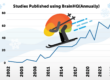
In addition to the INHANCE study, BrainHQ has shown benefits in more than 300 studies. These benefits cover a wide range of improvements in brain health, cognitive function, and everyday life—including better memory, safer driving, more self-confidence, and much more.